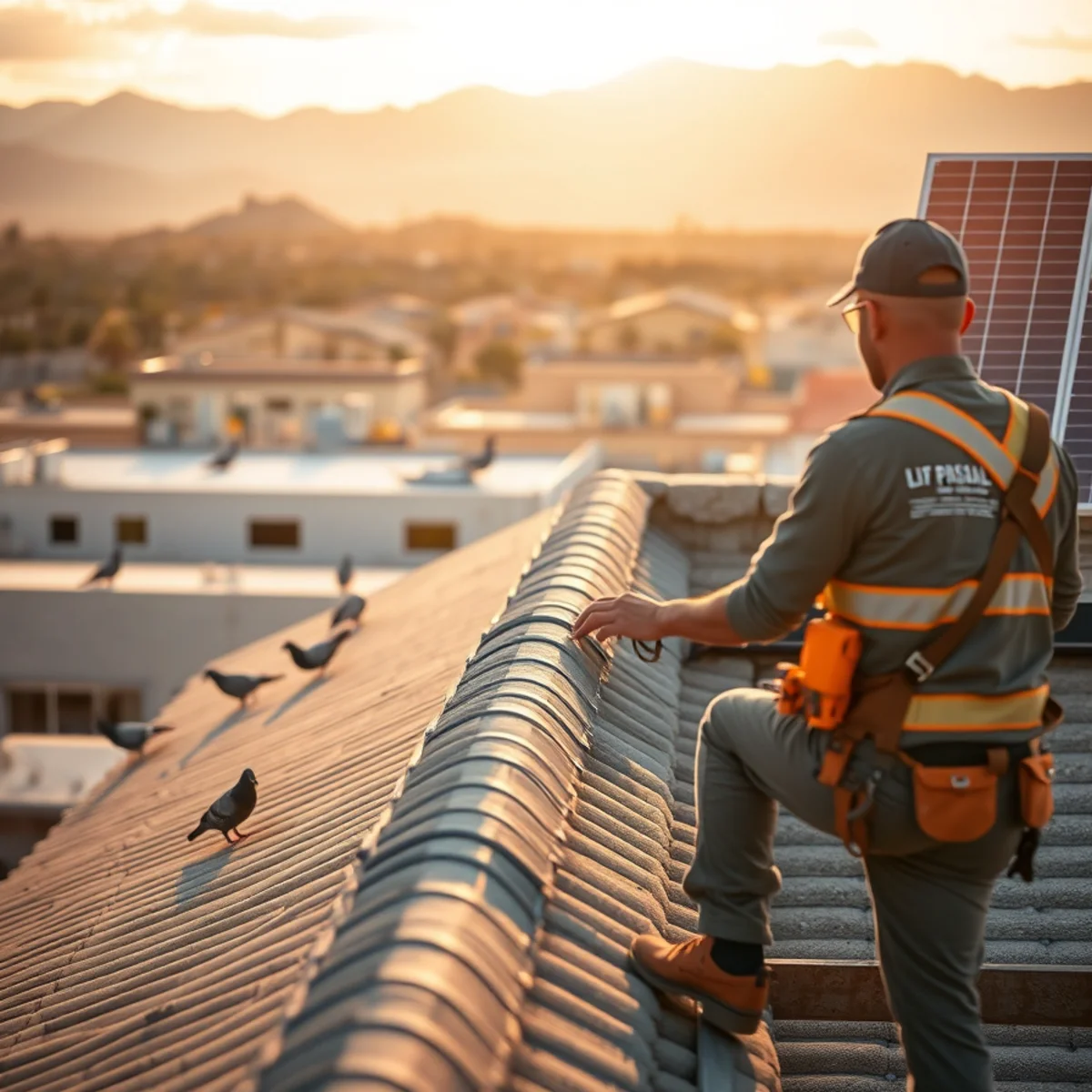
Pigeons are persistent because a roof can give them everything they need: shade, shelter from wind, a clear flight path, and a protected place to nest. Removing a few birds or cleaning the visible droppings does not change that. Effective pigeon control in El Paso has to identify the roosting system and make the protected spaces unavailable.
This is Annihilate Pest Control's signature niche. Reviewers describe Robert and his team responding quickly, documenting roof conditions with photographs, explaining the proofing plan, cleaning up extensive messes, and checking back after the work. Several customers specifically mention failed work by previous providers that had to be redone. That experience shapes a more careful approach: inspect first, solve the access problem, and verify the finished installation.
Signs it is time to request pigeon control
- Repeated cooing, wing noise, or movement above ceilings and patios
- Droppings building up on roofs, parapets, sidewalks, vehicles, or equipment
- Nesting material beneath solar panels or behind rooftop structures
- Gutters or drainage paths blocked by feathers and debris
- Birds returning immediately after cleaning or scare devices are installed
- Odor, staining, insects, or visible damage around long-term roosts
What is included in pigeon control
Whole-roof pigeon assessment
The inspection follows flight paths, landing points, nest pockets, panel edges, parapets, canopies, rooftop equipment, gutters, and adjacent structures. The aim is to understand the complete roosting pattern before one visible opening is closed.
Cleanup scope before closure
Nests, feathers, droppings, drainage obstructions, and inaccessible contaminated zones are documented. When cleanup and disinfection are included, the proposal distinguishes what can be removed from what requires separate access or surface work.
Site-specific bird exclusion
Proofing is selected and shaped for the active edge: solar-panel perimeter, ledge, roof transition, equipment opening, or other sheltered route. Corners, conduit, tile contours, and wind-exposed seams receive deliberate attention.
Finished-edge verification
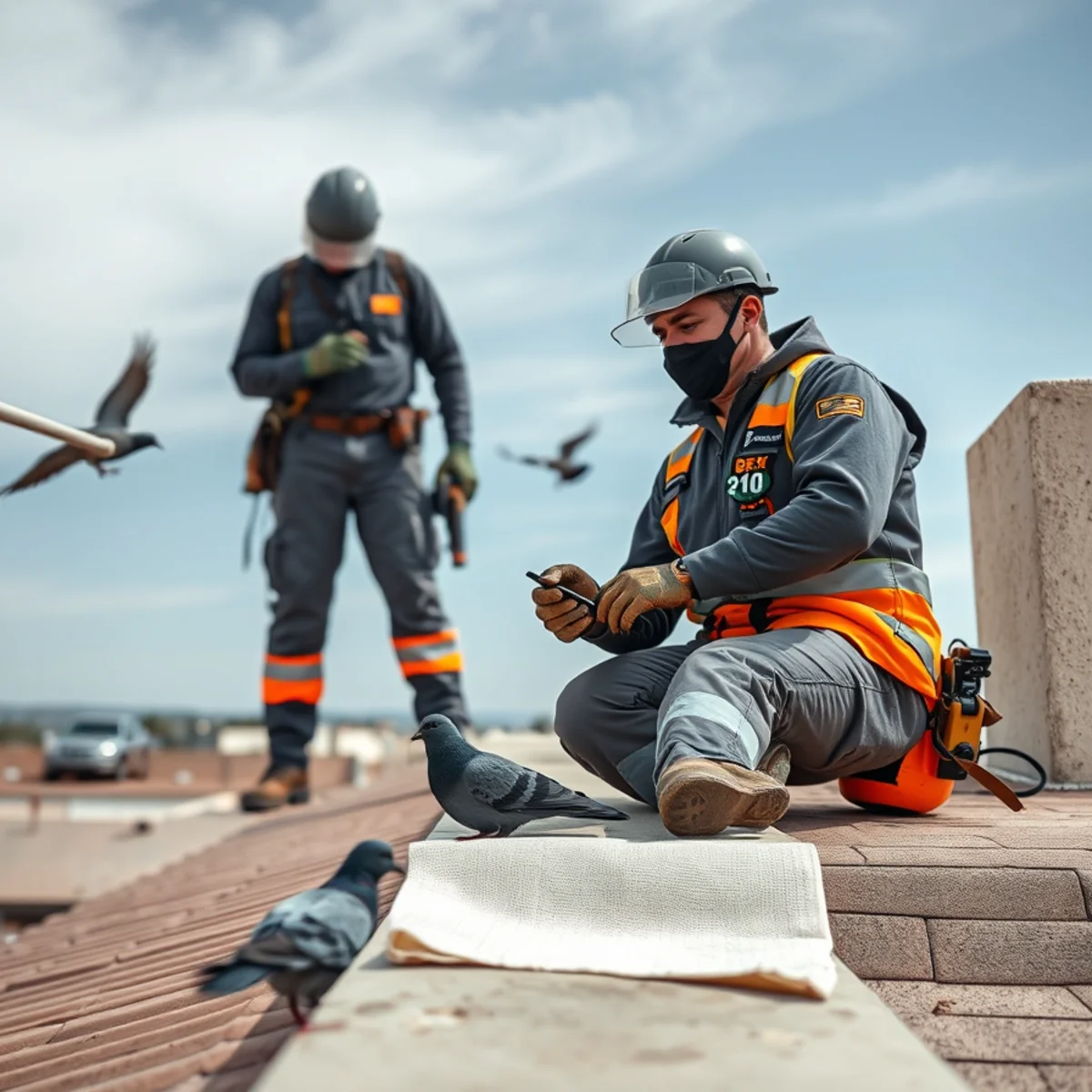
The completed area is checked for bypass openings, loose attachment, drainage conflicts, and the possibility of trapping birds. Before-and-after photographs help owners understand conditions that are difficult to see from the ground.
Our service process
Roof and flight-path assessment
The inspection identifies primary roosts, nesting pockets, approach routes, pressure points, drainage issues, and areas where birds can simply shift after one opening is blocked.
Site-specific proofing plan
The proposed barrier layout is explained before work begins. Solar edges, ledges, roof transitions, canopies, and equipment may need different methods based on access and construction.
Cleanup and disinfection
When included in the scope, accumulated debris is removed and affected surfaces are treated as appropriate before barriers close off the space. Existing material should not be sealed beneath proofing.
Installation and verification
The finished work is checked for gaps, loose edges, bypass routes, and places where birds could become trapped. Photographic documentation helps you understand what changed.
Why pigeons keep choosing El Paso roofs
Flat and low-slope rooflines, parapets, shade structures, rooftop units, and solar arrays create sheltered edges that mimic the ledges pigeons naturally use. A sunny desert roof can be harsh in the open, while the space beneath a panel stays shaded and protected. Once a pair nests successfully, the site becomes familiar and repeated use makes the mess grow faster.
Pressure also shifts. Blocking one preferred opening without addressing the rest of the roof may move birds to the next panel, parapet corner, or neighboring shade structure. That is why a full roof assessment is more valuable than measuring a single visible gap.
Proofing is construction detail, not decoration
A durable barrier must follow the shape of the protected edge, remain secure through heat and wind, preserve drainage, and avoid interfering with the equipment it surrounds. Corners, conduit transitions, tile profiles, and changes in roof height are common bypass points. A clean straight run can still fail if the last few inches are left open.
Photos before and after the work create accountability. They show the nesting conditions, the cleanup extent, and the finished edges that are difficult to see from the ground. They are also useful later if roofing, solar, or electrical work requires temporary removal and correct reinstallation of the proofing.
Make the first visit more productive
Before requesting pigeon control, write down where and when you noticed repeated cooing, wing noise, or movement above ceilings and patios, droppings building up on roofs, parapets, sidewalks, vehicles, or equipment, nesting material beneath solar panels or behind rooftop structures. Photograph evidence when you can do so safely, but do not disturb nests, droppings, mud tubes, harborages, or unfamiliar pests just to create a closer image. If you have used a product, installed an older barrier, moved furniture, repaired a leak, or changed landscaping, share the timing. Those details help connect the visible symptom to the route.
Clear access to the active zone without moving the problem into another room or structure. Be ready to discuss roof height, pitch, surface material, and safe access, number and size of active roosting or nesting zones, linear footage and complexity of proofing around solar panels or ledges. A precise history allows the assessment to spend less time reconstructing the story and more time confirming the source, explaining options, and defining what should happen first.
What affects the estimate?
No fake flat price can represent every property. These factors shape the scope:
- Roof height, pitch, surface material, and safe access
- Number and size of active roosting or nesting zones
- Linear footage and complexity of proofing around solar panels or ledges
- Volume and condition of droppings, nests, and contaminated debris
- Repairs needed where older proofing has failed or damaged the installation
Why choose Annihilate Pest Control for pigeon control
Pigeon work is a signature specialty
Annihilate Pest Control is branded as the People's Choice for Pest & Pigeon Control. The scope can connect assessment, debris removal, disinfection, solar proofing, roof exclusion, and follow-up instead of treating the visible birds as an isolated event.
Review evidence from real roof projects
Supplied customers describe Robert documenting difficult roof areas, correcting failed proofing, explaining the work, responding rapidly, and following up after installation. Those are observable service behaviors, not an invented warranty.
The whole roosting system is considered
Pigeons can shift from one panel group or parapet corner to the next. Reviewing alternate shelter, flight access, nearby ledges, equipment, and drainage reduces the risk of solving only the easiest section.
Clear separation of cleanup and proofing
The estimate identifies which roosts are included, how access affects the job, what debris work belongs before closure, and what proofing perimeter will be installed. That makes competing quotes easier to compare honestly.
Pigeon Control across the El Paso service area
Pigeon-control assessments are available across listed Texas service areas, from Downtown and Central El Paso parapets to Eastside commercial roofs, Horizon City solar-equipped homes, and Socorro properties near irrigated corridors. Roof profile, solar layout, neighboring roosts, and access determine the work—not the neighborhood name alone.
Send the complete address and describe whether the activity involves panels, ledges, equipment, patios, signage, or interior noise. Ground-level photographs can help with triage, but roof conditions and safe access still need to be confirmed before the proofing scope is final.
pest control in Downtown El Paso, pest control in Eastside El Paso, pest control in Horizon City, and pest control in Socorro are detailed in their local service guides.